DTF vs screen printing on dark shirts: which print method do you choose?
On dark shirts, DTF and screen printing are a different call. An honest comparison based on run size, design and delivery time.
For merch on a white shirt, the choice between DTF and screen printing usually isn't decisive. The ink covers the fabric directly and the price per piece differs only marginally for most designs.
On dark shirts it's different. A bright yellow print on black needs a white underbase, because without that layer the yellow ink mixes with the black fabric underneath and you get a dull, muddy colour.
The way that underbase is applied is the main difference between DTF and screen printing, and with it, which method is the right call in your situation.
Screen printing: white is a separate colour
With screen printing, white is a separate colour. That means an extra screen, an extra layer of ink on the shirt and extra setup costs. For a design with two coloured elements on black, in screen printing you're actually looking at three screens: white, colour 1 and colour 2.
For each of those screens, frames are prepared, set up and cleaned. That's work that has to happen once per colour, whether you print twenty-five or two hundred and fifty shirts.
DTF: white underbase built in as standard
DTF has that white underbase built in as standard. The printer first lays down a white base layer on a transfer film, then the coloured design, then a hot-melt adhesive that presses the design onto the shirt.
No extra screen, no extra setup time. The effect shows up directly in the price. For small runs on dark, DTF is almost always cheaper. For larger runs the balance shifts, because screen printing gets cheaper per piece once the setup costs are spread across enough shirts.
Small run up to 50 pieces: DTF
For a small run up to about fifty pieces, DTF is the logical choice. The setup costs of screen printing stay too high per shirt to be competitive. A two-colour design on a black shirt with us typically costs between eleven and fifteen euros per piece with DTF, including the white underbase you'd pay for separately with screen printing.
At five to seven working days, the delivery time is about a week shorter than screen printing, which can make a real difference for release drops or tour deadlines.
Tour run of 50 to 250 pieces: screen printing
For a tour run of fifty to two hundred and fifty pieces with a simple colour palette, screen printing wins. Here the setup costs work out in your favour, the price per shirt drops below DTF, and you get a deeper, embedded print that stays sharp longer.
For merchandise that gets washed often, that's an audible difference after fifty washes. The delivery time runs up to ten to fourteen working days, enough for most planned drops but too long for an unexpected deadline.
Photo-realistic designs: always DTF
Photo-realistic designs always call for DTF, regardless of the run size. Screen printing works with flat areas of ink and can't produce gradients, shadows or photographic detail. So an artist portrait on the back of a hoodie is something you print, not screen print.
The same goes for designs with more than five colours on a larger run. Sometimes a hybrid of screen printing for the main areas and DTF for fine details comes out cheaper than everything in screen printing. You see this with crew shirts that have several elements, or with merchandise where the main logo is screen printed and a small sub-brand is in DTF.
How Serzo and Hardstyle DNA handled it
For Serzo we printed seventy-five hoodies for his 2025 winter tour. The design was a bright yellow DNA helix on a black heavy oversize hoodie.
From seventy-five pieces, screen printing starts to become an interesting option in theory, but with two colours and a tour deadline that couldn't wait for the longer screen-printing turnaround, we chose DTF. The margin screen printing would have saved per piece would have been lost to a delayed delivery that would have missed part of the tour dates.
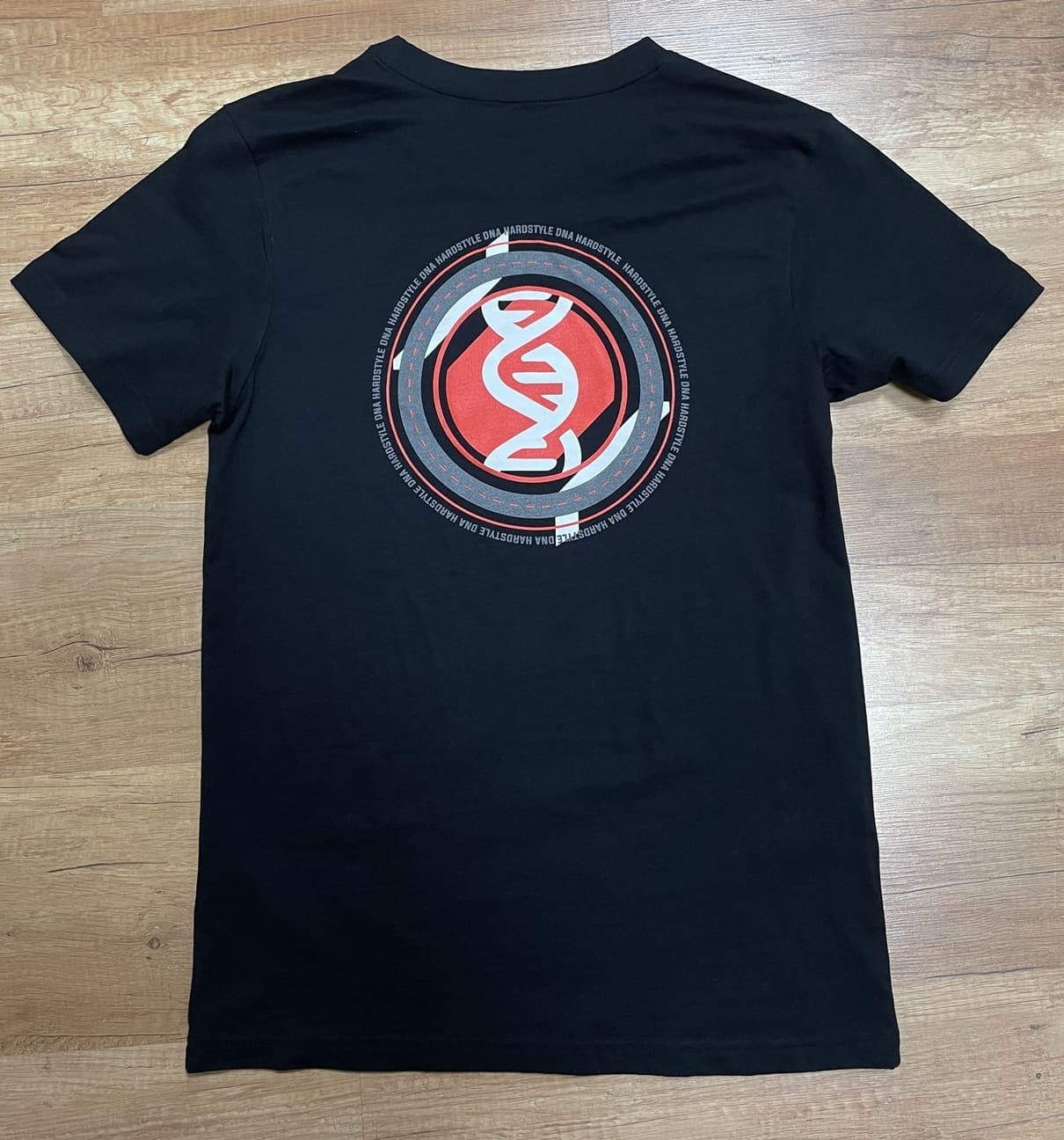
For Hardstyle DNA the trade-off was different. A crew run of two hundred and fifty shirts, three colours, no photo elements and a deadline six weeks out.
Here screen printing won per piece, and the final result was printed in screen printing too. A heavier, embedded print with sharp lines that suits a festival setting where shirts are worn daily.
Common mistakes
A white underbase isn't always spelled out in every quote, which means you end up comparing two different products without realising it. Other shops do count it and then suddenly look more expensive, while in reality they deliver the same thing.
The number of colours in the design also gets underestimated with screen printing. Three colours on black means four screens, five colours means six screens. With small runs that adds up fast.
Finally, it's wise to take the turnaround seriously. DTF in five to seven working days, screen printing in ten to fourteen. For a release drop or tour deadline that can mean a difference of a week to ten days.
The choice, in short
For small runs up to fifty pieces on dark, choose DTF. For larger runs with a simple colour palette, from fifty pieces with one to three colours, choose screen printing. For photo-realistic designs always DTF, regardless of the run size.
If in doubt, send us your design and we'll work out both options for you, no obligation, so you can make an informed choice.